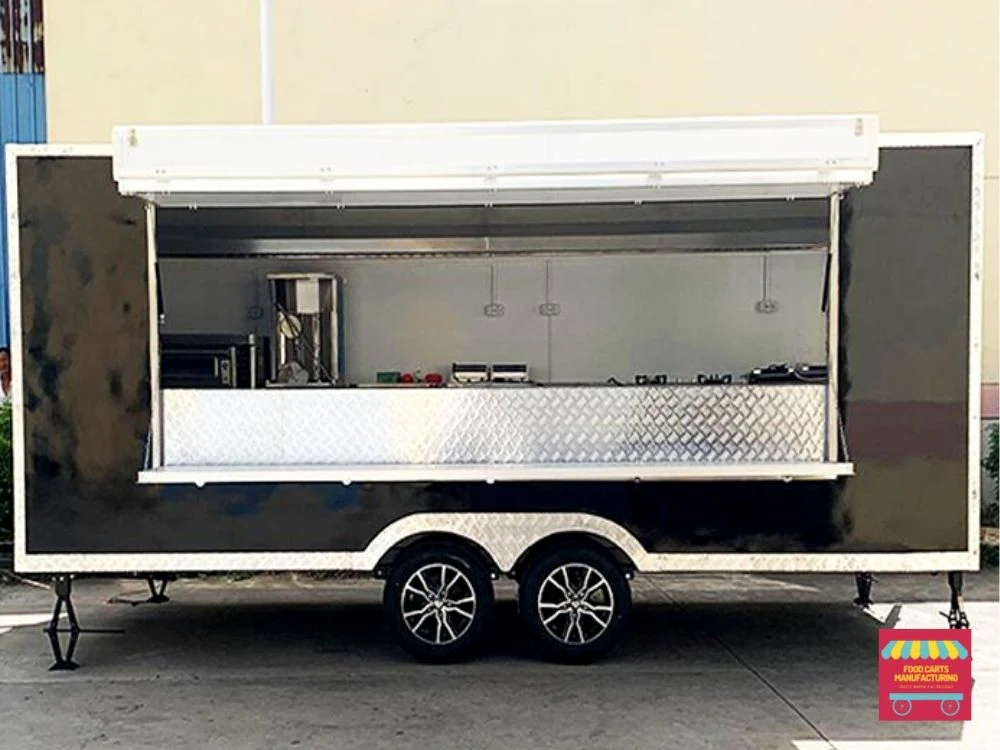
A Fire Risk Assessment required in a Mobile Catering Van in the United Kingdom
Yes — a fire risk assessment is required for a mobile catering van (food truck, trailer or similar unit) in the United Kingdom.
This is treated as a legal requirement across England, Wales, Scotland and Northern Ireland by trade bodies (such as NCASS), local authorities, event organisers and fire-safety specialists. A catering van is a workplace when it is being used for cooking and serving food, even though it is also a vehicle.
The legal basis In England and Wales the main law is the Regulatory Reform (Fire Safety) Order 2005. The “responsible person” (normally the business owner or operator) must carry out a suitable and sufficient fire risk assessment and put in place appropriate fire-safety measures. From 1 October 2023 the assessment and the fire-safety arrangements must be recorded in writing, regardless of how many people you employ.
Scotland has equivalent duties under the Fire (Scotland) Act 2005 and Fire Safety (Scotland) Regulations. Northern Ireland has similar rules under the Fire and Rescue Services (Northern Ireland) Order 2006.A general health-and-safety risk assessment under the Health and Safety at Work etc. Act 1974 and the Management of Health and Safety at Work Regulations is also required; fire is one of the hazards that must be covered.
Although the Fire Safety Order contains an exemption for vehicles used purely as a means of transport, industry practice and local-authority guidance treat a parked catering unit as a workplace. Councils explicitly state that the food-business operator must carry out a fire risk assessment.
What the assessment must coverTypical fire hazards in a mobile catering van include:
Review it at least annually and whenever you change equipment, layout or trading locations.Practical requirements that usually followEvent organisers and many local authorities expect:
- LPG cylinders and gas appliances
- Deep-fat fryers, griddles, ovens and hot oil
- Generators and electrical equipment
- Combustible materials (packaging, waste, grease build-up)
- Restricted space and limited escape routes
- A written fire risk assessment
- Appropriate extinguishers (commonly a dry-powder extinguisher suitable for gas/oil fires plus a fire blanket; a CO₂ extinguisher if you have significant electrical equipment)
- Annual gas-safety inspection by a Gas Safe registered engineer qualified for commercial LPG catering equipment (UKLPG Code of Practice 24)
- PAT testing of electrical equipment and safe siting of any generator
It Should be noted that the blank pages or printed matter that is more of a guide that we have found in National Catering Membership packs is insufficient to be used as your Fire Risk Assessment , although the associations claim that it is included in there packs , it is not , as it is not bespoke to your business and leaves you liable for prosecution from the authorities .
CALL 0800 776 5018 TO OBTAIN A PRICE FOR A FIRE RISK ASSESSMENT OR TO BOOK AN APPOINTMENT OR EMAIL sales@fireinspector.co.uk
Leave a Comment
I hope you enjoyed this post. If you would like to, please leave a comment below.