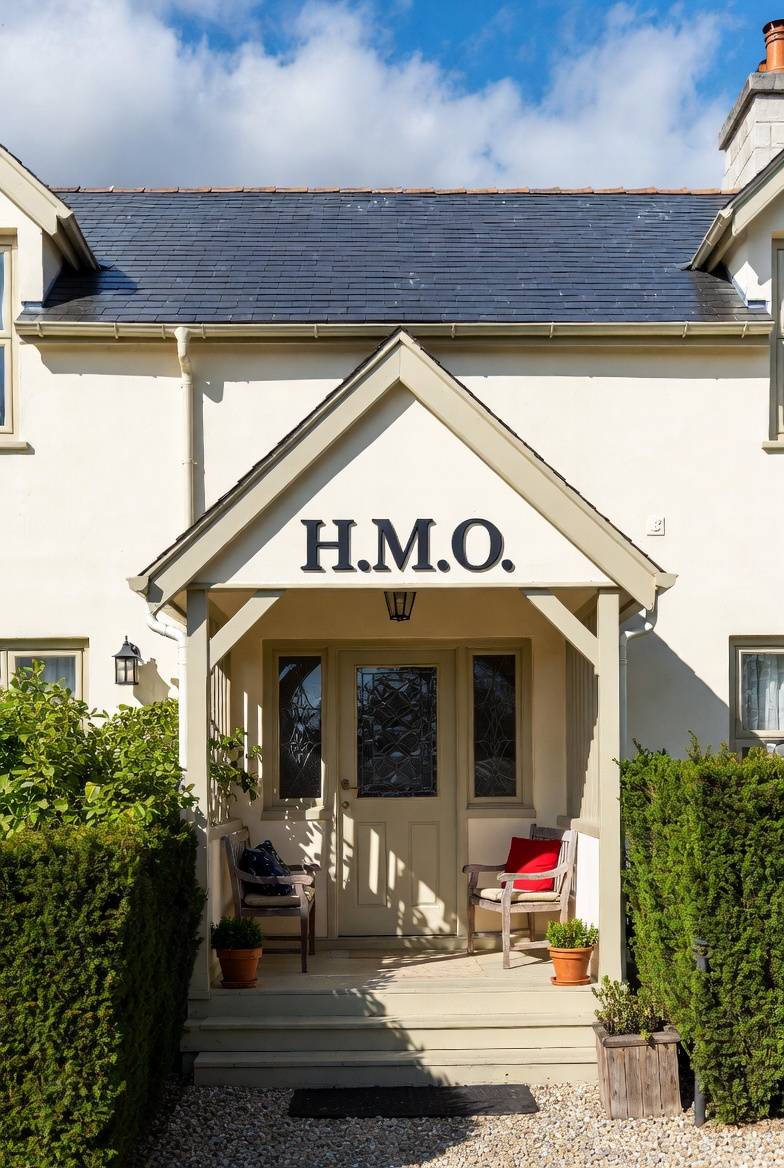
A Fire Risk Assessment required in a House of Multiple Occupation also known as an H.M.O in the United Kingdom
Yes. A fire risk assessment is legally required for Houses in Multiple Occupation (HMOs) in the United Kingdom.
The main legislation in England and Wales is the Regulatory Reform (Fire Safety) Order 2005 (often called the Fire Safety Order or FSO). Similar duties exist in Scotland and Northern Ireland under their own fire safety laws.Who must do it?The “responsible person” — normally the landlord, owner, or managing agent who has control of the premises — must carry out a suitable and sufficient fire risk assessment.
This applies to the common parts of the HMO (hallways, stairwells, shared kitchens, landings, and other shared areas). Following the Fire Safety Act 2021, the assessment must also consider the building’s structure, external walls (including cladding, balconies, and attachments), and doors between individual rooms/flats and the common parts.
Individual bedrooms themselves are mainly covered by housing legislation (Housing Act 2004 and the Housing Health and Safety Rating System), but the responsible person still needs to consider how fires starting in rooms could affect escape routes. Recording requirement Since 1 October 2023 (via Section 156 of the Building Safety Act 2022), the entire fire risk assessment must be recorded in writing, regardless of the size of the HMO or number of occupants. It must be available for inspection by the fire and rescue service.
How often? There is no fixed legal interval, but it must be reviewed regularly and whenever there is a significant change (new tenants, building works, change of layout, or change in occupancy). Most councils and fire services expect at least an annual review. You do not always need a completely new document — you can record the review date and any actions on the existing assessment.
Who can carry it out ? The law requires a “competent person.” A landlord can do it themselves if they have sufficient knowledge, training, and experience. In practice, many local authorities (especially for licensed HMOs) prefer or expect a professionally prepared assessment by someone with relevant qualifications or registration (e.g. IFE, BAFE, or similar). Using a competent professional provides stronger evidence of compliance if the fire service or council inspects.
Other overlapping duties Fire safety in HMOs is also enforced through:
You should also check your local council’s HMO licensing pages, as requirements can vary slightly by area . Failure to have a suitable written fire risk assessment is a criminal offence under the Fire Safety Order and can also lead to HMO licence issues, enforcement notices, fines, or prosecution.If you tell me the size of the HMO (number of storeys and occupants) and whether it is licensed,
- HMO licensing conditions (Housing Act 2004)
- The Management of Houses in Multiple Occupation (England) Regulations 2006
- Local council standards, which often follow the 2008 LACORS Housing – Fire Safety guidance
CALL 0800 776 5018 to obtain a price for a Fire Risk Assessment or to obtain a price . E Mail : sales@fireinspector.co.uk
Leave a Comment
I hope you enjoyed this post. If you would like to, please leave a comment below.